Conditions we treat
The jaw has an intimate relationship with the cervical spine, the cranial base, and your overall postural pattern. Assessing it in isolation frequently misses the point. We don't.
Book an AssessmentUnderstanding the condition
Temporomandibular dysfunction (TMD) refers to a range of problems affecting the temporomandibular joint the hinge joint connecting your jaw to your skull and the surrounding muscles, ligaments, and soft tissues that control jaw movement.
It is one of the most commonly under-assessed areas in musculoskeletal healthcare. Most people who present with jaw pain, clicking, or restricted mouth opening have been told to avoid hard foods, wear a night guard, or simply wait. These approaches may reduce symptoms temporarily, but they rarely address why the joint is dysfunctioning in the first place.
The jaw does not work in isolation. It sits at the base of the skull, immediately adjacent to the upper cervical spine, and is influenced by the tension patterns of the muscles attaching to it from below and above. A restriction in the upper neck, altered cranial mechanics following dental work or trauma, sustained postural loading from screen use any of these can contribute to TMD. Treating the jaw without looking at the whole picture is like treating a headache without looking at the neck.
Common symptoms
What we look for
WHY THE JAW-NECK CONNECTION MATTERS
The muscles that move and stabilise the jaw share fascial connections with the muscles of the anterior neck and the sub-occipital region. The trigeminal nerve which supplies sensation to the jaw converges with the upper cervical nerve roots in the brainstem, which is why neck problems so commonly produce jaw symptoms and vice versa.
This anatomical reality is why an osteopathic assessment of jaw pain always includes the cervical spine. Restrictions in the upper neck are a common contributing factor we look for, and where present, they form part of your overall treatment plan.
How we treat it
A full case history covering jaw symptoms, dental and orthodontic history, headaches, neck pain, stress levels, and sleep. We map the whole picture before treatment begins.
The upper neck is assessed in every jaw pain presentation. Restrictions at C1 and C2 are a common contributing factor in jaw dysfunction, and where found, are addressed as part of your treatment plan.
Direct soft tissue treatment to the muscles of mastication the masseter, temporalis, pterygoids, and digastric to reduce tension, improve circulation, and restore normal muscle tone.
Where clinically appropriate, intraoral soft tissue work allows direct access to the pterygoid muscles key contributors to jaw dysfunction that cannot be effectively reached externally.
David is trained with the Sutherland Cranial College of Osteopathy. Gentle cranial techniques address the mechanics of the cranial base and temporal bones, which have a direct influence on jaw function.
Guidance on jaw habits, sleep position, stress management strategies, and exercises tailored to your specific presentation because what you do between sessions matters.
Why osteopathy
Most people with TMD have seen a dentist, who may have fitted a splint or night guard. Some have seen a physiotherapist. In many cases, these approaches provide partial relief but the underlying problem remains.
Osteopathy brings a different perspective. Rather than treating the jaw as a local problem, we look at the full mechanical context the neck, the cranial base, the postural patterns that load the jaw unevenly over time.
This doesn't mean the jaw is always secondary. Sometimes it isn't. But the assessment will tell us what's driving what, and treatment follows that picture not a protocol.
Jaw pain and TMD can be assessed as a primary presentation or as part of a wider clinical picture. The approach is determined by what the assessment reveals, not by a fixed protocol.
David holds advanced training with the Sutherland Cranial College of Osteopathy a particularly relevant qualification for jaw and cranial base presentations.
You will never be asked to commit to a package of sessions. We will tell you honestly how many appointments we think you need after your first assessment.
Common questions
Do I need a referral from my dentist or GP?
No. You can book directly without any referral. If we think your symptoms require dental or medical investigation alongside osteopathic treatment, we will tell you clearly and can provide written clinical findings to support any onward referral.
I already have a night guard will osteopathy still help?
A night guard manages the consequences of bruxism and jaw clenching, but it doesn't address the underlying tension or mechanical dysfunction that causes it. Osteopathic assessment can be valuable alongside a night guard, looking at the contributing factors the appliance alone doesn't address.
Is intraoral treatment uncomfortable?
It can be tender in areas of significant muscle tension, but treatment is always carried out within your comfort zone. Everything is fully explained before it is carried out, and your feedback guides the pressure and approach throughout. Intraoral work is only used where it is clinically indicated, not as routine.
How many sessions will I need?
This varies depending on how long the symptoms have been present, how complex the contributing factors are, and how your body responds to treatment. We will give you a realistic, honest expectation after your first assessment rather than a fixed number upfront.
Can TMD cause headaches and ear pain?
Yes. The convergence of the trigeminal nerve with the upper cervical nerve roots means that jaw dysfunction very commonly produces headaches around the temple, forehead, and behind the eyes. Ear pain, tinnitus, and a feeling of fullness in the ear are also well-recognised features of TMD, caused by the proximity of the jaw joint to the ear canal and by tension in the surrounding muscles.
Can stress really cause jaw pain?
Yes. The jaw is one of the primary sites where the body expresses unresolved muscular tension. Clenching and bruxism are often entirely unconscious and are closely linked to stress load. Osteopathic assessment looks at this stress-related tension as part of the whole picture, and we will give you practical strategies for managing it between sessions.
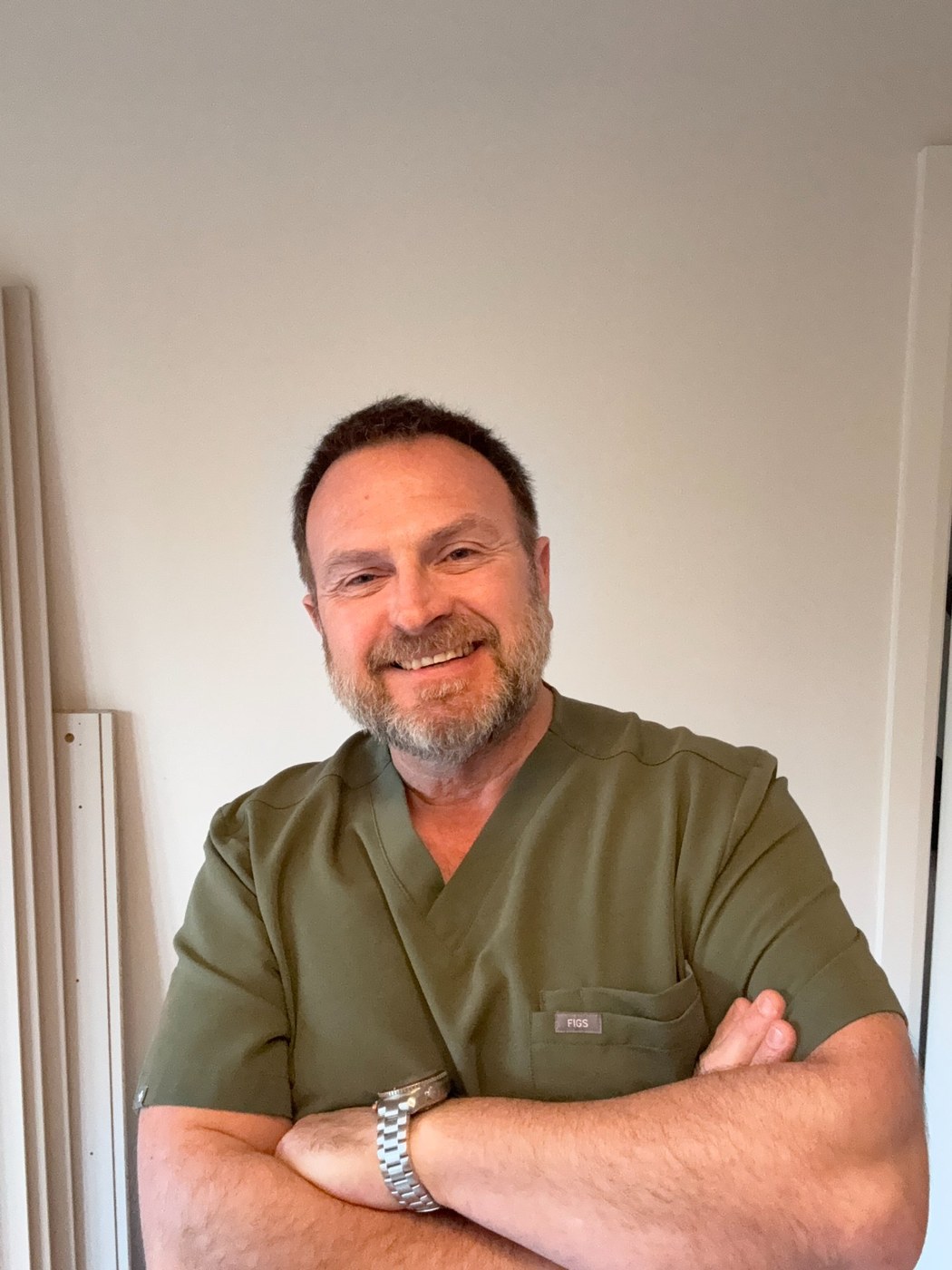
David Feherty
Registered Osteopath & Principal
David holds advanced cranial training with the Sutherland Cranial College of Osteopathy, making him particularly well-placed to assess jaw and cranial base presentations as part of a whole-person approach. In clinical practice since 1999.
BOst (Hons) GOsC Registered Sutherland Cranial CollegeNew patient assessments available often within the same week. No referral needed, no treatment block sign-ups.
References
1. The management of temporomandibular disorders: a headache in general practice. Br J Gen Pract. 2019;69(687):523-524.
2. Yakkaphan P, Smith JG, Chana P, Renton T, Lambru G. Temporomandibular disorder and headache prevalence: a systematic review and meta-analysis. J Oral Rehabil. 2022.
Osteopathic treatment for jaw pain and TMD is not a substitute for dental or medical investigation of serious symptoms. If you are experiencing severe pain, difficulty swallowing, unexplained swelling, or symptoms you are concerned about, please consult your GP or dentist. David Feherty is registered with the General Osteopathic Council (GOsC registration no. 1169).